Laser hair removal involves more than a device passing over the skin: your consultation, hair-growth stage, skin tone, preparation and aftercare all affect the appointment. By the end, you will know what happens at each stage, how long different areas take, what sensations and reactions are normal, and which questions to ask before booking.
Key takeaways
- Settings must match your skin tone, hair type and treatment area.
- Shave before treatment; do not wax or pluck during the treatment course.
- Expect multiple appointments because lasers target hairs in the active growth phase.
- Seek medical advice for spreading redness, blistering, severe pain or pus.
What happens before the laser is switched on?
The consultation determines the settings before the laser hair removal process begins; one setting is not suitable for every skin type, hair pattern or body area.
1. The clinician reviews your medical history, medicines, hormonal symptoms, previous reactions, and recent sun, tanning-bed or self-tanning-product exposure. Tell them about conditions such as polycystic ovary syndrome, medicines that increase light sensitivity, and any history of burns or pigment changes.
2. The treatment area is examined for skin colour, irritation, recent tanning and the hair’s colour, density and coarseness. Dark, coarse hair gives the laser a clearer melanin target, while fine or light hair needs a different expectation.
A recent tan, sunburn or artificial tanning product can increase burn and pigment-change risk, so treatment may be delayed until the skin returns to its baseline colour.
3. Ask about a test spot when your skin is darker, recently exposed to sun, highly reactive or new to the device. The clinician may begin with conservative settings and review the response before treating the full area.
4. Stop waxing, tweezing, plucking and epilating for the clinic’s specified interval, usually several weeks, because removing the hair from its follicle reduces the laser’s target. Shave or trim only when instructed, and arrive with clean skin free of deodorant, creams, oils and makeup.
5. Protective eyewear is mandatory because laser energy can injure the eyes, even when the beam is aimed at a small area.
What happens during the treatment, and how long does each area take?
The appointment begins by positioning you comfortably, exposing only the treatment area and marking sections when precise coverage is needed. Protective eyewear is fitted before the clinician applies cooling gel or uses the device’s cooling system.
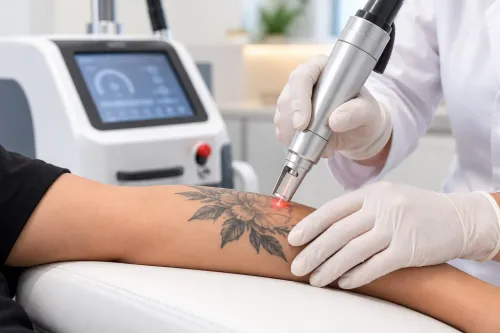
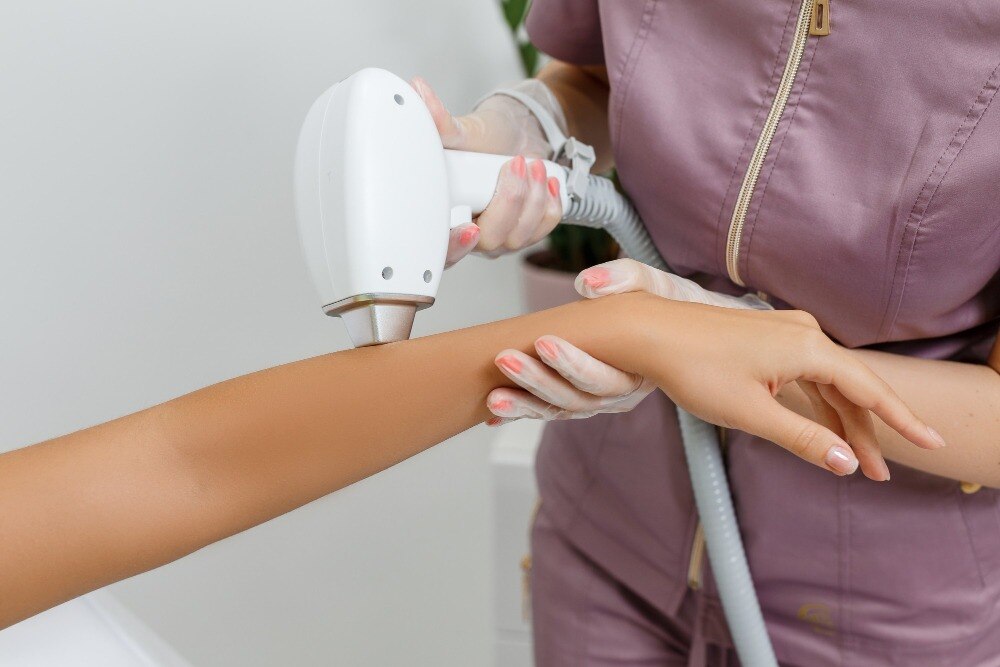
1. The handpiece delivers repeated pulses across small sections of skin. Laser energy is absorbed mainly by dark melanin in the hair shaft and follicle, creating heat that damages the follicle while the cooling protects the surrounding skin.
2. A small facial area or underarms takes about 10 to 20 minutes. A bikini area takes about 15 to 30 minutes, arms about 30 to 45 minutes, and full legs about 45 to 90 minutes.
3. Add time for consultation, positioning, preparation and cooling. The exact duration changes with surface area, hair density, device speed and whether you choose a partial or full area.
4. Expect warmth, snapping or brief stinging during each pulse, followed by cooling. Tell the operator if discomfort feels excessive; do not silently tolerate it.
5. Dark hair provides the strongest target. White, grey, blond and some red hairs respond poorly because they contain little or no usable melanin.
If you have brown or black skin, wavelength, fluence, pulse duration and cooling affect safety because epidermal melanin can also absorb energy. For laser hair removal Tathawade providers, ask how settings and test spots are selected for your skin tone rather than choosing by device name alone.
Why are several appointments needed, and what results should you expect?
One appointment cannot remove every hair because laser works best during anagen, the active-growth phase, when the hair remains connected to a growing follicle. Hairs in the same area cycle at different times, so only some are vulnerable during each visit.
Expect roughly four to eight appointments. Intervals should follow the body site and visible regrowth, not an arbitrary weekly schedule: returning too soon can treat few newly active hairs, while waiting for the advised regrowth pattern gives the next session a better target.
| Hair type | Expected response | Why |
|---|---|---|
| Coarse, dark hair | Clearest response | More melanin absorbs laser energy |
| Fine hair | Less predictable | The shaft contains less pigment |
| Blond, white or grey hair | Little or no response | There is too little usable melanin |
The goal is long-term, or “permanent,” hair reduction—not guaranteed permanent removal. The FDA-cleared term “permanent hair reduction” means a stable reduction in regrowing hairs after a completed course, not a promise that no hair will return. Regrowth can require maintenance sessions.
If comparing laser hair removal treatment in punawale, ask how results will be reviewed rather than accepting a promise of total removal. Polycystic ovary syndrome and other hormonal conditions can stimulate new facial hair after technically adequate treatment; laser reduces existing pigmented hairs but does not correct the hormonal cause.
Assessment is sensible if facial hair returns with irregular periods or other hormonal symptoms.
How do you choose a safe local provider near Tathawade?
Choose a provider by safety evidence, not by proximity: a Tathawade address or a search result for laser hair removal in pune does not prove clinical quality.
Ask these questions before booking:
- Who assesses your skin, hair colour, density and coarseness, and who operates the device?
- Does a qualified clinician review your medicines, hormonal symptoms and previous reactions?
- Which device and wavelength will be used, and is it a laser or IPL?
- How will recent tanning, sunburn or artificial tanning affect the appointment and pigment-change risk?
- Will you receive wavelength-appropriate eye protection, test-spot guidance, emergency advice and scheduled follow-up?
| Device | What it means | What to compare |
|---|---|---|
| Long-pulsed Nd:YAG | A longer wavelength absorbed less by epidermal melanin | Commonly considered for darker skin, but not automatically suitable |
| Shorter-wavelength laser | Targets melanin with different absorption and penetration | Requires careful settings on brown or black skin |
| IPL | Broad-spectrum light, not one laser wavelength | Compare filters, operator experience and skin-type suitability |
On darker skin, fluence, pulse duration, cooling and a test spot matter because excess epidermal absorption can cause burns or temporary or permanent pigment changes. A cautious provider adjusts these factors to your skin rather than relying on the device’s advertised name.
Aesthetic Plus Clinic -Skin Specialist 08048033198 in Punawale can be compared using this same checklist: ask for the assessment process, device details and follow-up plan instead of choosing solely because it is nearby.
Related service
Skin Treatments Laser Hair Removal Treatment in Punawale, Pune Dr Nisha’s Aesthetic Plus Clinic – Advanced Care for Smoother-Looking Skin Are you looking for laser hair removal in Punawale, Pune? Dr Nisha’s... View service → |
What should you do after the appointment, and when is a reaction unsafe?
Warmth, redness and small swollen bumps around the follicles are common immediately afterward and usually settle within a short period. Follow the clinic’s cooling and product instructions rather than applying unapproved creams or ice directly to the skin.
- Avoid hot showers, saunas and steam for 24 to 48 hours.
- Postpone intense exercise for about 24 hours, because heat and sweat can worsen irritation.
- Avoid swimming while the treated skin feels irritated. Follow the clinic’s timing if chlorine or salt water stings.
- Reduce friction from tight clothing for 24 to 48 hours.
- Avoid direct sun and apply broad-spectrum sunscreen between sessions.
- Pause retinoids, exfoliating acids, fragranced products and other irritants until sensitivity has settled.
Contact the clinic for blistering, crusting, severe pain, spreading swelling or infection signs such as increasing warmth, pus or fever. Seek clinical advice for pigment darkening or lightening that persists, or for symptoms continuing after ordinary redness has settled.
Report paradoxical hypertrichosis: an uncommon increase in nearby fine or dense hair after treatment. It deserves particular attention after facial treatment and in darker skin, so request a review before repeating sessions.
Frequently asked questions
What happens before laser hair removal near Tathawade?
A clinician reviews your medical history, skin type, hair pattern, medicines and recent tanning before choosing settings. The area is examined and prepared, and you receive eye protection and aftercare instructions.
How long does laser hair removal take for each area?
Timing depends on the area and device. Small areas such as the upper lip take less time than underarms, bikini areas, arms or legs. Ask the provider for an area-specific estimate during consultation.
Why are several laser hair removal appointments needed?
Laser energy works best on hairs in the active growth phase. Because hairs grow on different cycles, repeat appointments are needed to treat more of them as they enter that phase.
How do you choose a safe laser hair removal provider near Tathawade?
Choose a clinic that offers a consultation, records your skin and hair assessment, explains the device and settings, provides protective eyewear, discusses risks and gives clear aftercare instructions. Ask who performs the treatment and how complications are handled.
What should you do after laser hair removal, and when is a reaction unsafe?
Keep the area cool, avoid heat and friction, use sun protection, and follow the clinic's product instructions. Contact a clinician for spreading redness, blistering, severe pain, marked swelling, pus or fever.
Keywords