Flaking after commuting, sweating, helmet use or repeated shampoo changes is not always ordinary dandruff. You will learn how to separate dandruff from psoriasis, contact dermatitis, tinea capitis and dry scalp, then match the symptoms to an ingredient, routine or professional examination.
Key takeaways
- Check for redness, oiliness, itch and recurrence before choosing treatment.
- Use ketoconazole, zinc pyrithione or salicylic acid for matching symptoms.
- Wash after heavy sweating and dry your scalp thoroughly after commuting.
- Seek a scalp consultation when inflammation, hair loss or persistent flakes appear.
Is it dandruff, dry scalp or another scalp condition?
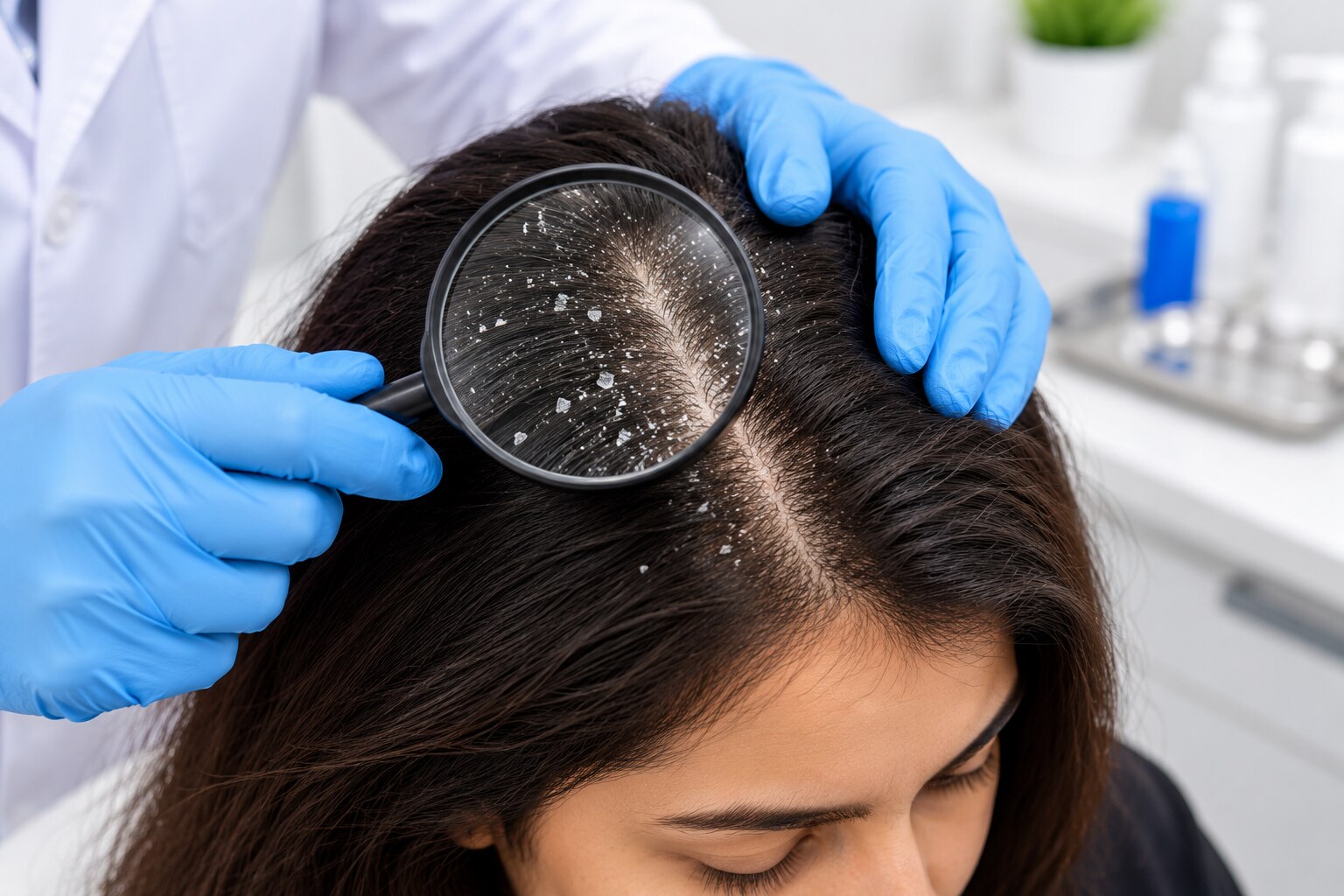
Loose white flakes with mild itch and no marked redness fit ordinary dandruff; fine flakes with a tight, dry feeling and little oil fit dry scalp. Dandruff overlaps with mild seborrhoeic dermatitis, so recurrence and inflammation matter.
| Condition | Clues | What it suggests |
|---|---|---|
| Ordinary dandruff | Loose white or yellow flakes, mild itch | Mild scalp scaling |
| Dry scalp | Fine flakes, tightness, low oil | Moisture loss or irritation |
| Seborrhoeic dermatitis | Oily, recurrent flakes with itch and redness | Inflammation linked to scalp oil and Malassezia yeast |
| Scalp psoriasis | Sharply defined, thick plaques extending beyond the hairline | Psoriasis rather than routine dandruff |
| Contact dermatitis | Burning or itching after a new dye, oil or styling product | Irritant or allergic reaction |
| Tinea capitis | Broken hairs, tender pustules or patchy hair loss | Fungal infection needing medical treatment |
Arrange a dermatologist’s examination instead of trial-and-error shampooing if you have:
- Thick plaques, bleeding, pus or painful swelling
- Flaking or rash around the eyebrows or ears
- Patchy hair loss, broken hairs or tender pustules
The searches dandruff treatment hinjewadi phase 1 and scalp treatment in punawale describe locations, not separate diagnoses. A clinician must identify whether the problem is dandruff, seborrhoeic dermatitis, psoriasis, contact dermatitis or tinea capitis before matching treatment.
Which anti-dandruff ingredient matches your scalp symptoms?
Match the active ingredient to the scalp problem, not to the brand name. Recurrent flakes with itch and redness usually point toward yeast control; thick, stuck scale needs loosening before it can wash away.
| Ingredient | Main action | Best fit and cautions |
|---|---|---|
| Ketoconazole | Targets Malassezia-related yeast overgrowth | Recurrent dandruff with itch or redness; follow the prescribed or label schedule |
| Zinc pyrithione | Helps control flaking and microbial imbalance | Mild to moderate dandruff; useful when yeast control and regular maintenance are needed |
| Selenium sulfide | Targets Malassezia-related yeast overgrowth | Persistent oily flaking; stop or reduce use if irritation or dryness develops |
| Piroctone olamine | Helps control microbial imbalance and flaking | Maintenance or milder dandruff formulas; response varies by product |
| Salicylic acid | Loosens thick, adherent scale | Stuck plaques or heavy buildup; overuse can cause stinging, dryness and irritation |
| Coal tar | Reduces scaling and inflammation | Thick, inflamed scaling; its smell, staining and increased sun sensitivity can make it inconvenient |
Apply medicated shampoo to the scalp, not only to the hair. Massage it across affected areas, leave it for the contact time printed on the label, then rinse; immediate rinsing reduces its benefit. Use the stated frequency rather than washing repeatedly.
If one ingredient irritates or fails, changing actives can be more sensible than increasing washes. Frequent medicated washing can dry the scalp and hair. Do not scrape scale, and do not use steroid lotion without clinical direction: inappropriate or prolonged steroid use can thin skin, mask infection or worsen the wrong diagnosis.
How should you manage a scalp during Hinjewadi commuting and exercise?
Wash your scalp often enough to remove sweat, oil and dust, but not so aggressively that it becomes tight or flaky. Base the frequency on your sweat and hair texture: rinse or shampoo soon after heavy exercise when sweat stays trapped under a helmet, while lighter-sweat days may need less washing.
Dry the roots fully; damp roots under a helmet hold heat and moisture.
During long Hinjewadi commutes, heat, humidity, dust and helmet friction can irritate some scalps, but they are not proven causes of dandruff for everyone. Possible hard-water residue can also leave the scalp feeling tight or itchy. Rinse thoroughly, use a gentle shampoo between medicated washes, and consider filtered water if symptoms consistently follow washing.
- Keep the helmet’s inner lining clean and completely dry.
- Do not share helmets.
- Never wear a damp helmet; let it dry before commuting.
- Avoid tight headwear immediately after exercise.
Do not scratch or scrape flakes: broken skin can sting and invite infection. Heavy oils over an inflamed scalp can trap sweat, worsen occlusion and make scale harder to remove; stop them if burning or redness increases.
This routine is separate from a hair treatment Hinjewadi search. Scalp care addresses sweat, scale and irritation, whereas treatments for hair thinning or hair density require a different assessment and plan.
When is shampoo enough, and when should you seek local treatment?
Use an over-the-counter medicated shampoo for mild, uncomplicated flaking and itch. Follow its label for contact time and frequency for two to four weeks; rinsing it off immediately can make a good product appear ineffective.
| Path | Situation | Action |
|---|---|---|
| 1. Mild | Light flakes and itch without pain, pus, hair loss or thick plaques | Use medicated shampoo as directed for two to four weeks. |
| 2. Concerning or persistent | Severe symptoms, recurrence despite correct use, or signs of psoriasis, contact dermatitis or tinea capitis | Seek prescription care and a scalp diagnosis. |
| 3. Local assessment | You need scale removal, diagnosis or a tailored plan | Book a consultation rather than expecting a universal procedure. |
Suspected tinea capitis needs a prescription oral antifungal because fungus inside the hair shaft cannot be cleared by shampoo alone. Shampoo can support treatment and reduce spread, but it is not the cure.
Operationally, a dandruff removal treatment in punawale means scalp examination, diagnosis, loosening or removing adherent scale, controlling yeast-related overgrowth, reducing inflammation and planning recurrence prevention. It does not mean permanent removal in one session.
A local consultation should match treatment to the diagnosed problem, not to the search phrase “scalp treatment in Punawale.” Aesthetic Plus Clinic -Skin Specialist 08048033198 is one option for that assessment, particularly when symptoms do not fit ordinary dandruff.
Related service
Hair Treatments Dandruff Removal Treatment in Punawale Persistent dandruff can cause visible flakes, scalp itching, irritation and discomfort. View service → |
What should happen after the first month of treatment?
After about one month, judge the scalp rather than the hair shaft. Less itching, less redness and less visible scale show genuine progress; hair that looks temporarily clean after washing does not.
If a correctly used over-the-counter treatment has not improved these symptoms after about four weeks, arrange a dermatologist review. The diagnosis, active ingredient, contact time and washing frequency may need reassessment.
Once seborrhoeic dermatitis is controlled, plan for maintenance because it commonly relapses:
- Use an anti-dandruff shampoo about once weekly.
- If the scalp stays clear, reduce use to once every one to two weeks.
- Adjust the interval for recurrence, hair texture, dryness, chemical treatments and scalp tolerance.
A short, clinician-directed corticosteroid course can calm marked redness and itching. Steroid-only treatment is not a long-term dandruff plan; prolonged or inappropriate use can thin the skin and cause other scalp problems.
Seek earlier review for pain, oozing, crusting, pus, bleeding, facial or ear involvement, thick plaques or patchy hair loss. The suitable treatment is the one that matches the diagnosis and remains manageable without damaging your scalp or hair.
Frequently asked questions
How can you tell dandruff from dry scalp or another condition?
Loose white flakes with mild itch and no marked redness fit ordinary dandruff. Fine flakes with a tight, dry feeling and little oil fit dry scalp. Persistent redness, thick scale, soreness or hair loss needs a clinical assessment.
Which anti-dandruff ingredient should you choose?
Ketoconazole suits recurring dandruff linked with yeast overgrowth. Zinc pyrithione helps control flakes and itch. Salicylic acid loosens adherent scale but can dry the scalp, so follow it with suitable scalp care.
How should you manage dandruff during Hinjewadi commuting and exercise?
Wash after heavy sweating, avoid leaving a damp scalp under a helmet, and dry the roots thoroughly. Do not share helmets, towels or hairbrushes.
When is shampoo enough for dandruff?
Shampoo is reasonable for mild flakes without marked redness or hair loss. Seek local scalp treatment in Punawale when symptoms persist after consistent use, return quickly, or include inflammation, pain or shedding.
What should happen after the first month of treatment?
Review changes in flakes, itch, redness and recurrence. Continue the effective schedule if the scalp is controlled, or arrange a professional scalp assessment if symptoms remain or worsen.
Keywords